

Blog & Articles
YouTube Strategy Tips: 3 Tactics That Get Results
Introduction
Having a well-defined YouTube strategy in 2025 is more important than ever. With over 2.5 billion monthly active users, YouTube remains the world’s second-largest search engine - right behind its parent company, Google. For creators and businesses alike, it’s a platform that offers unmatched potential for visibility, engagement, and long-term growth. Whether you're aiming to grow a subscriber base, promote products, or build a loyal community, your strategy will determine how effectively your content performs in an increasingly crowded space.
As algorithms evolve and competition intensifies, relying on guesswork simply won’t cut it. A successful YouTube strategy today requires a smart balance of discoverability, content consistency, and active viewer engagement. In this blog post, we’ll explore three powerful tactics that get results in 2025: optimizing for YouTube search, maintaining a consistent and audience-first content rhythm, and building engagement through community features and cross-promotion. If you're ready to take your YouTube presence to the next level, these are the foundational steps you need to master.
1. Optimize for Search: YouTube SEO Done Right
One of the most important pillars of an effective YouTube strategy is search optimization. YouTube is not just a video platform - it’s a search engine. Understanding how to optimize your videos for search ensures your content is discoverable by the right audiences. This begins with keyword research. Tools likeTubeBuddy, VidIQ, and Google Trends help identify high-ranking and high-intent search terms that users are actively looking for. Selecting the right keyword phrases and strategically placing them in your video title, description, and tags can make a significant difference in how your content ranks.
Equally important is how you structure your video metadata. Start by writing titles that are both keyword-rich and emotionally compelling. Your video descriptions should include a summary of the content, timestamps, relevant links, and secondary keywords. Use tags that align with your core topic and build relevance for the algorithm. Incorporating closed captions and transcripts not only improves accessibility but gives YouTube more data to index, improving SEO. Thumbnails, while not directly related to ranking, are critical for click-through rates - so make sure they’re engaging, branded, and visually consistent with your channel.
In addition to metadata, YouTube's algorithm looks at engagement signals to determine how valuable your content is to viewers. Videos that earn likes, comments, and watch time tend to rank higher. This is where your YouTube strategy should include consistent calls to action - such as asking viewers to like the video, leave a comment, or subscribe. Adding interactive elements like end screens, cards, and links to playlists helps extend session duration and keep users engaged on your channel.
📌 As Backlinko explains, “Watch Time, CTR, and engagement are among the top signals YouTube uses to rank content.” Prioritizing these signals through intentional SEO not only improves visibility - it sets your entire content strategy up for long-term growth.
2. Content Planning & Consistency: The Power of a Publishing Rhythm
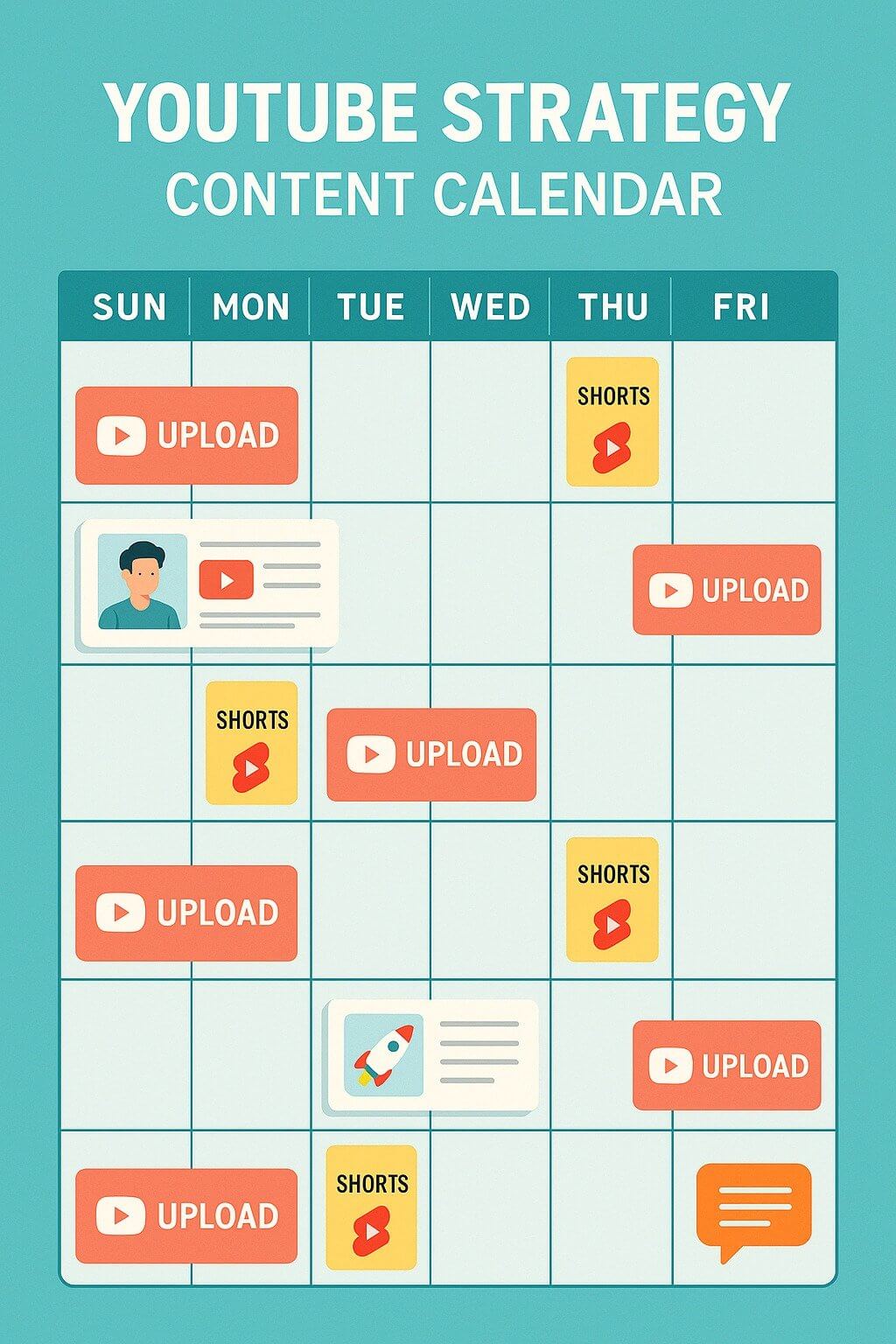
No YouTube strategy is complete without a consistent publishing rhythm. In today’s competitive digital landscape, consistency is what separates hobby channels from those that experience real growth. Developing a content calendar is key - not only does it help with organization, but it also ensures that you're aligning your content with audience interests, seasonal trends, and search demand. Use analytics to determine which video topics have performed well in the past, and collect feedback from your viewers through comments and community polls. Tools like YouTube Studio, Hootsuite, or Notion can help you schedule and manage content efficiently, making it easier to stay on track and avoid creative burnout.
Equally important is the type of content you publish. An effective YouTube strategy balances evergreen content - like tutorials, product demos, or FAQ videos - with trending formats such as challenges, Shorts, and timely reaction videos. Evergreen videos help drive long-term traffic and authority, while trend-driven content boosts immediate engagement and visibility. In particular, YouTube Shorts have become an essential part of content growth. According to Metricool, “Shorts can act as a fast-track discovery tool, getting new viewers onto your channel even before they see your long-form content.” This makes Shorts a low-barrier, high-reward tactic for gaining traction quickly.
But consistency isn’t just about when you post - it’s also about how you present your brand. Keeping a cohesive visual identity, tone of voice, and intro/outro format helps build brand recognition and professionalism. Even if you're working with limited equipment, simple enhancements like good lighting, clear audio, and basic editing can dramatically improve the viewing experience. Compelling storytelling, on the other hand, is priceless—and should always be a cornerstone of yourYouTube strategyregardless of budget.
3. Community Engagement & Retention Strategies
An often-overlooked component of a strong YouTube strategy is how well a channel engages its community and keeps viewers coming back. YouTube isn’t just a content platform - it’s a social platform. Fostering two-way conversations is essential to building trust and loyalty. Replying to comments, pinning insightful viewer contributions, and showing appreciation for your audience creates a sense of belonging. Additionally, YouTube’s Community tab is a powerful tool that lets creators connect beyond the video itself. You can use it to post polls, sneak peeks, questions, and updates that help keep your audience engaged between uploads.
To encourage return viewership, your YouTube strategy should focus on designing content pathways that keep people watching. Structuring your videos into series, using playlists effectively, and including end screens or cards to direct viewers to related content are all simple but powerful ways to increase watch time. When viewers know what to expect - and when to expect it - they’re far more likely to subscribe and keep coming back. Another powerful growth lever is collaboration. Partnering with other creators in your niche can help you tap into adjacent audiences and build credibility through association. Co-branded interviews, tag-team challenges, or “part 1/part 2” collaborations are great examples of how cross-promotion can work within your broader YouTube strategy to expand your reach and foster deeper community connections.
Conclusion
A high-performingYouTube strategydoesn’t have to be complicated - but it does have to be intentional. As we’ve explored, there are three essential tactics that can make a measurable difference in your channel’s growth: optimizing for search, planning content with consistency, and actively engaging your audience to build loyalty and retention. These elements work together to improve visibility in YouTube’s algorithm, build meaningful subscriber relationships, and ultimately drive higher conversions - whether that means more views, leads, or sales.
If you’re just getting started or looking to refine your current approach, begin by focusing on one tactic at a time. Implement SEO best practices using the right tools, commit to a realistic publishing schedule, and start treating your comment section and Community tab like the two-way street they are. The most effective YouTube strategy is one that evolves with your audience and stays aligned with your brand’s voice and goals. Stay consistent, stay curious, and remember: progress on YouTube doesn’t come from perfection - it comes from showing up and delivering value week after week.
Let’s Build Your YouTube Strategy Together
Ready to turn your YouTube channel into a growth engine? Whether you’re just getting started or want to scale what’s already working, we’ll help you craft a data-backed YouTube strategy tailored to your goals.
📅Schedule a free consultation with our team today:
👉 https://calendly.com/agency8200/agency-8200-web
